




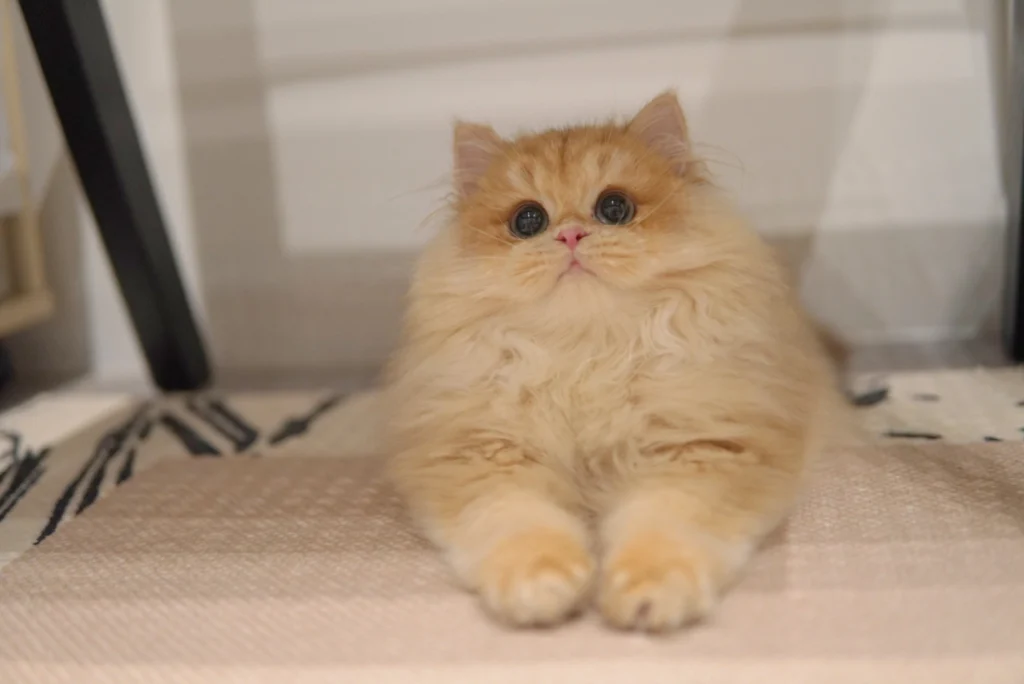
Quick answer: British Longhairs are calm, steady, low-drama cats. They are affectionate but not clingy, they prefer sitting near you to sitting on you, and most of them dislike being picked up. They tolerate being left alone during the workday better than most breeds, and they are quiet. If you want a cat that follows you from room to room and settles a metre away, this is the one. If you want a lap cat that purrs on demand, look elsewhere.
Most breed descriptions online tell you a British Longhair is “affectionate, calm and good-natured.” That is true and almost useless. Every breed page says some version of it. What you actually want to know before spending real money on a kitten is what the cat does at 7am when you are trying to leave for work, what it does when your friends come over, and whether it will sit on you while you watch TV.
We raise these cats, so we watch them grow up from four weeks old and we hear from owners for years afterwards. What follows is closer to what the day actually looks like.
They Are Near You, Not On You
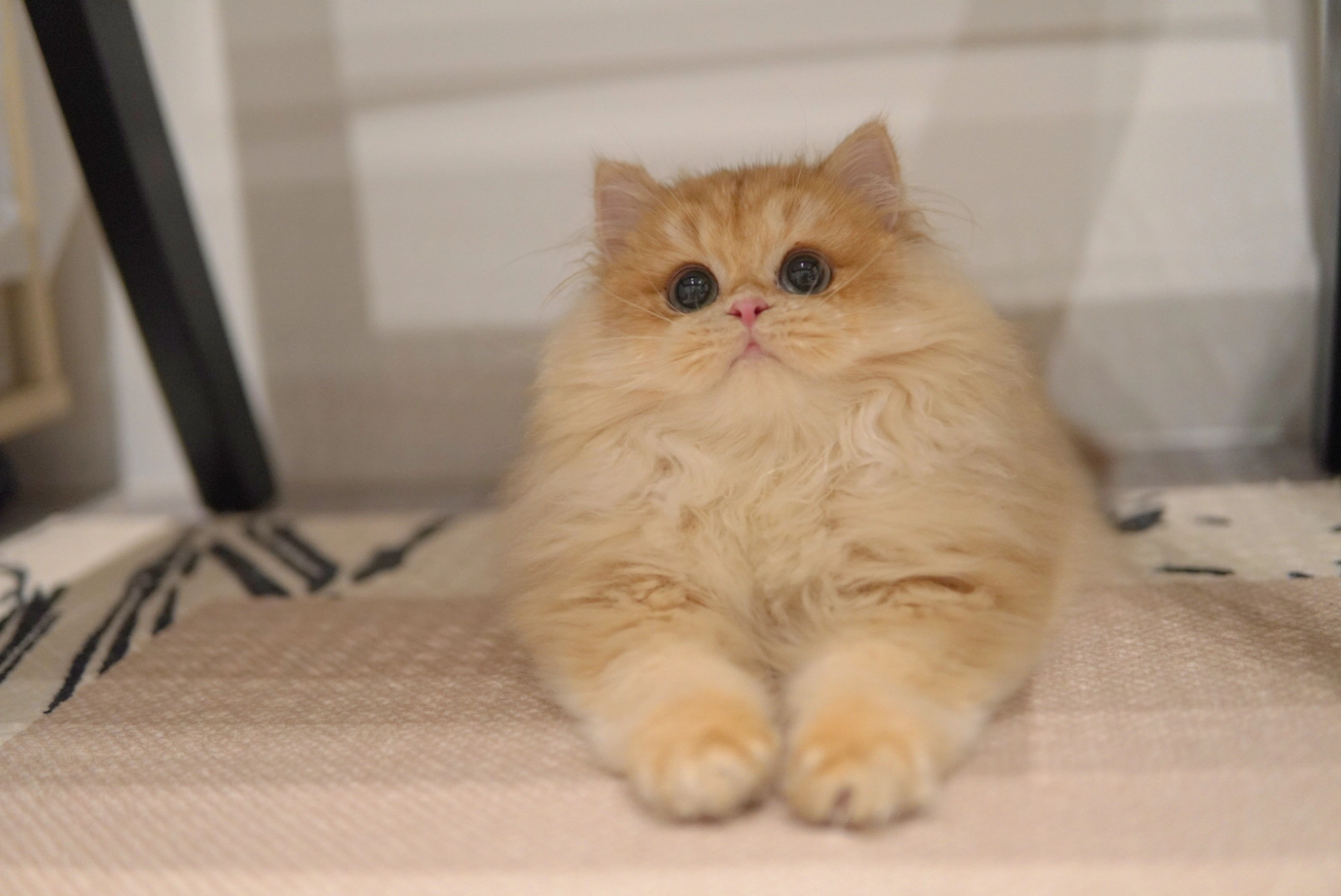
This is the single most defining thing about the breed and the thing new owners misread most often.
A British Longhair will follow you around the flat. Kitchen, bathroom door, back to the sofa. It wants to know where you are. But when it arrives, it does not climb onto you. It picks a spot within a metre or two, settles into a loaf, and goes to sleep facing you.
First-time owners sometimes read this as the cat being cold. It is the opposite. The following is the affection. The distance is just how the breed is built. If you sit on the floor, a lot of them will close the gap on their own terms and lean against your leg, which is about as demonstrative as they get.
The practical version: you will rarely have to move a cat off your laptop, and you will almost never be woken up by one sitting on your chest.
Most of Them Hate Being Picked Up
British Shorthairs are famous for this and the Longhair inherited it wholesale. The reason is in the breed’s history: the coat came from a Persian outcross, but the temperament came straight from the British Shorthair, and that cat has never liked having its feet off the ground.
You can pick one up. It will not scratch you or panic. It will simply go stiff, wait, and then pour itself out of your arms at the first opportunity with the air of someone being very patient with you.
This matters for two groups of people:
- Families with young children. A kid who wants to carry the cat around like a toy is going to be disappointed, and a cat that is constantly grabbed will start avoiding that child. It works beautifully when children are taught to sit still and let the cat come to them. We cover this in more detail in our post on whether British cats are good with kids and other pets.
- Anyone who specifically wants a lap cat. Some British Longhairs do become lap cats, usually after a year or two of trust. Plenty never do. Do not buy one hoping to change this.
They Are Genuinely Quiet
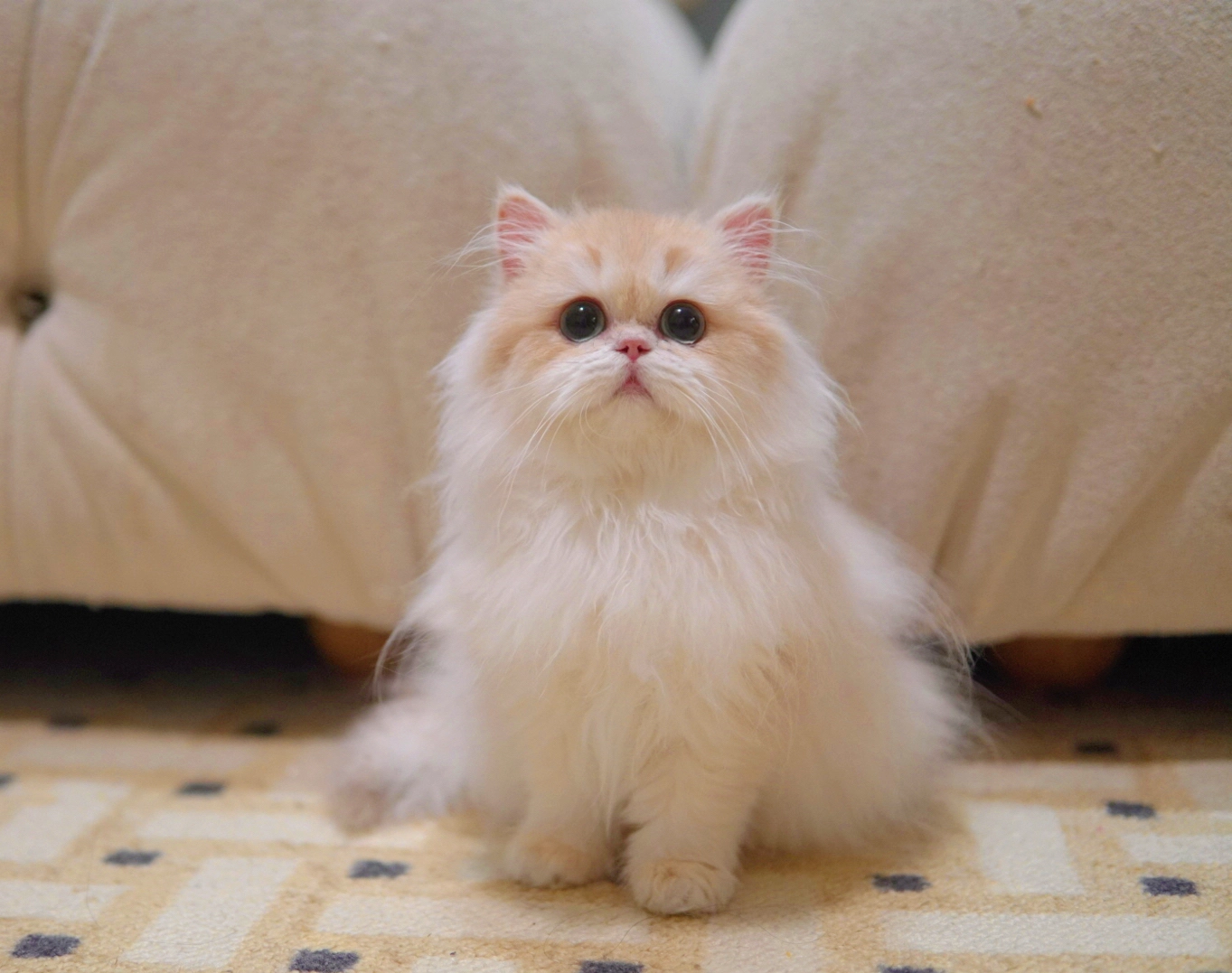
If you live in an HDB flat or a condo with thin walls, this is worth real money.
British Longhairs have soft, slightly squeaky voices and they do not use them much. They will not yowl at 4am or stand over an empty bowl shouting at you, and when one does meow, it is usually short and quiet enough that you might miss it from the next room.
Compare that to an Oriental or a Siamese, which will hold a conversation with you all evening. If you have been put off cats by a noisy one, this breed is a different experience entirely.
They Handle Being Left Alone
Most people reading this work full days. It is the question we get asked most.
British Longhairs are one of the more independent breeds and they cope with an empty flat better than most. They sleep, they sit at the window, they eat, they sleep again. Coming home to a destroyed sofa is not a British Longhair problem.
That said, “handles it well” is not the same as “does not care.” They are still social cats and they still notice. Signs that a cat is not coping include over-grooming, using the toilet outside the litter box, and following you to the door with unusual intensity. Our guide on separation anxiety in cats goes through what to watch for.
Two practical things help a lot. Give them a window perch with something to watch. And if you are regularly out more than ten hours, consider two cats rather than one, because they get on well with their own kind.
They Are Slow to Warm Up to Strangers
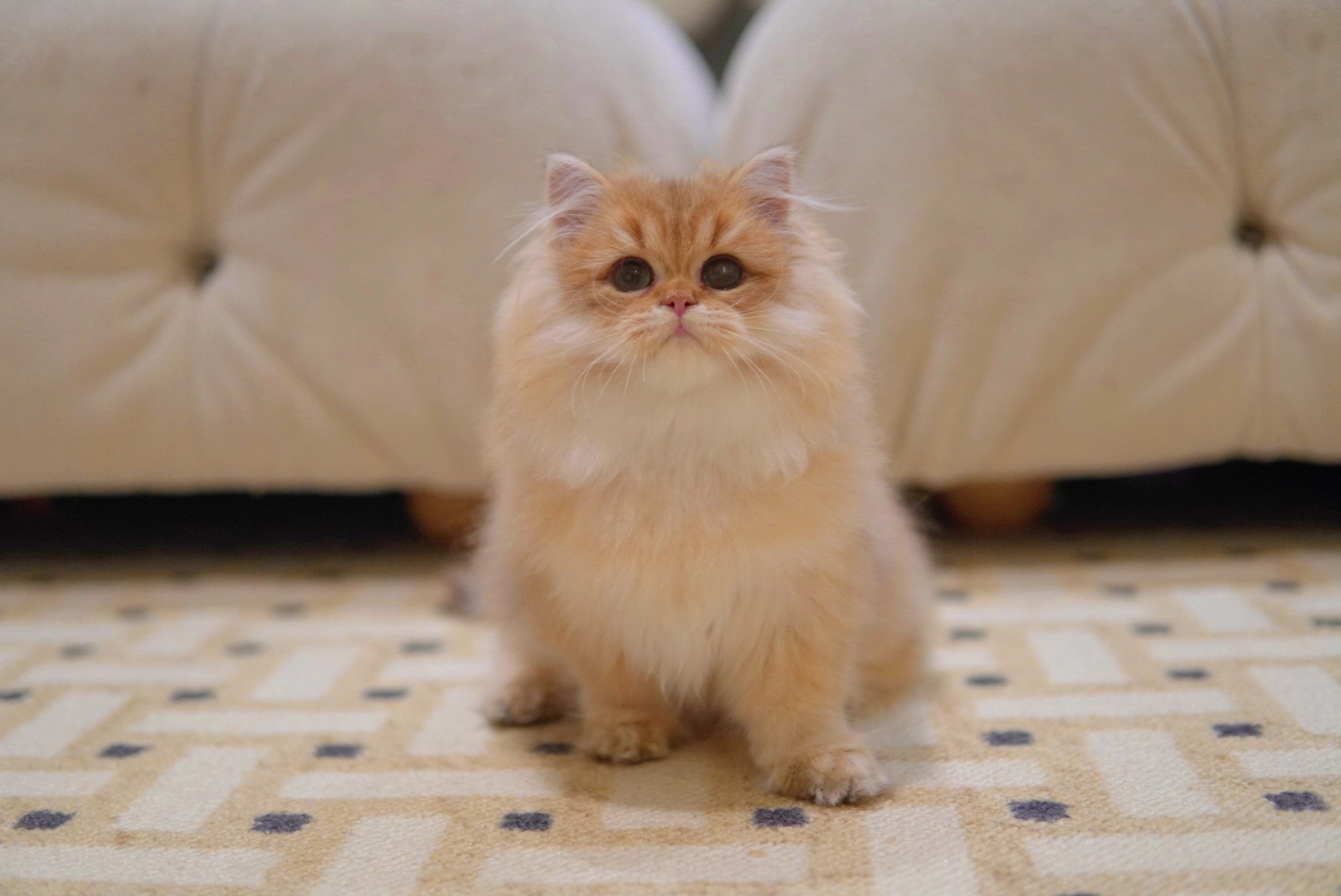
When visitors arrive, a British Longhair does not hide under the bed and it does not run over to say hello. It goes somewhere with a clear view, sits down, and watches. After twenty minutes it might walk past, close enough to be noticed, and then carry on with its day.
Guests who love cats often find this frustrating. Owners tend to find it funny. Either way, it means the cat will not be stressed by you having people over, which is more than can be said for a lot of nervous breeds.
The Energy Level Is Low, and That Has a Cost
These are not athletic cats. Kittens play hard in short bursts, and by two or three years old most British Longhairs have settled into a routine of short play sessions followed by long naps. They are not climbing your curtains or knocking things off shelves at 3am.
The cost of that calm is weight. This is the health issue we flag most often with owners. A cobby, heavy-boned cat that likes lying down and lives in an air-conditioned flat with a full food bowl will get fat, and excess weight in this breed leads to joint problems and diabetes risk.
Measure the food rather than free-feeding. Get them moving with a wand toy for ten minutes twice a day, which most of them will happily do even if they will not do much on their own. Our guide to setting up a cat-friendly home in a Singapore HDB or condo covers the vertical space and perches that help.
The Coat Changes the Daily Routine, Not the Personality
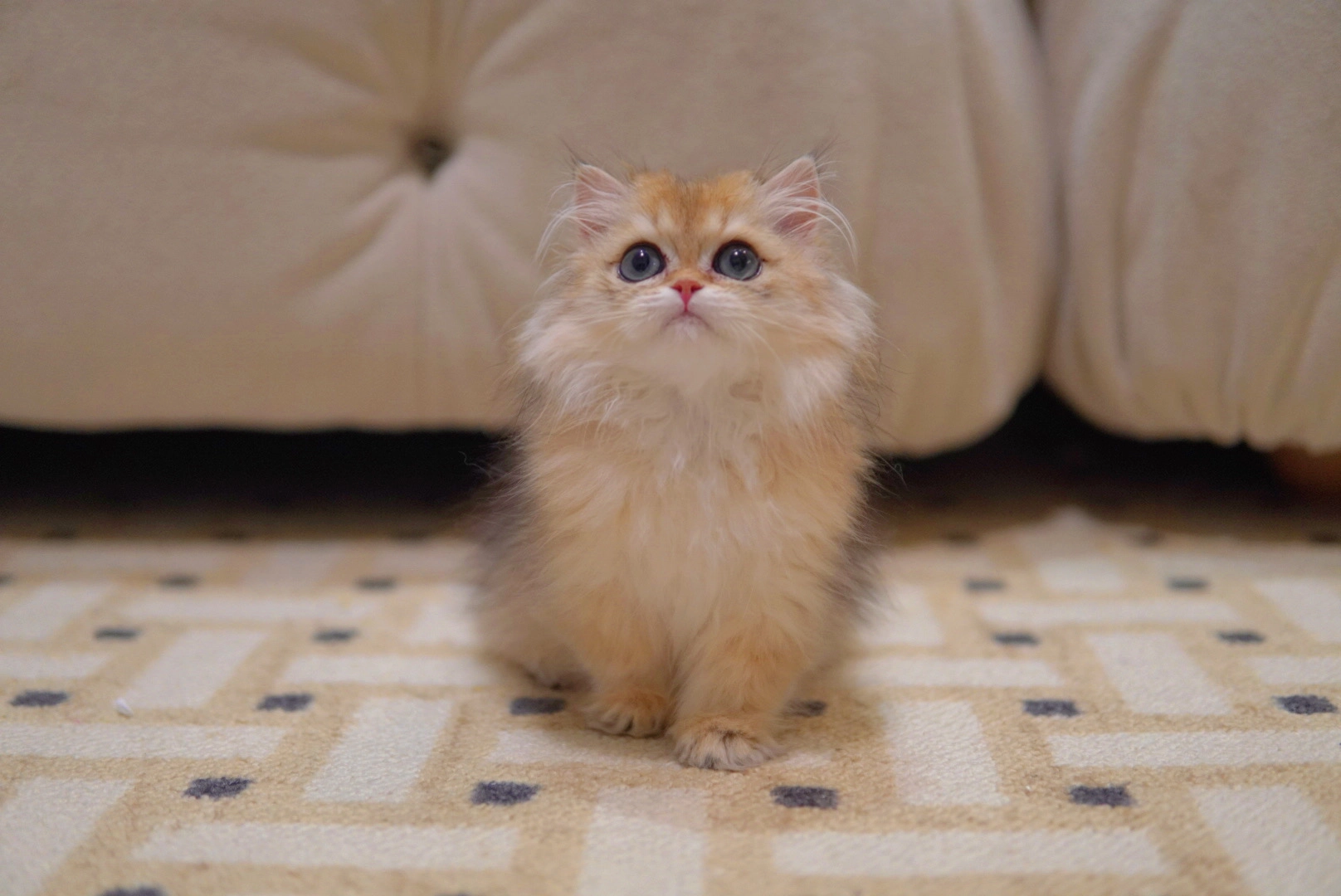
People choosing between a British Longhair and a British Shorthair are really choosing between two coats attached to the same cat. The temperament is the same. What differs is your week.
A British Longhair has a dense, semi-long coat that mats behind the ears, in the armpits and around the back legs if it is left alone. Brushing two or three times a week keeps it fine. Skip it for a month and you are looking at knots that have to be cut out.
Singapore adds a wrinkle. In a humid climate, a dense double coat holds moisture and heat, and cats that move between an air-conditioned bedroom and a warm living room shed unpredictably rather than seasonally. Brushing tends to be a year-round job here rather than a twice-a-year one. Our post on grooming long-haired cats covers the tools that work on this coat type.
Most British Longhairs tolerate brushing well if it starts in kittenhood. Start late and it becomes a fight, so ask your breeder whether the kitten has been handled and brushed already.
Who This Breed Suits
A good fit if you:
- Work full days and want a cat that copes on its own
- Live in an HDB flat or condo and need a quiet cat
- Want company in the room rather than a cat in your face
- Have older children who understand not to grab
- Are happy to brush a few times a week
A poor fit if you:
- Specifically want a cuddly lap cat that likes being carried
- Want a playful, high-energy cat that entertains you
- Have very young children who will handle the cat constantly
- Will not keep up with grooming
Frequently Asked Questions
Are British Longhairs affectionate?
Yes, but on their own terms. They show affection by following you around the home and settling near you rather than by sitting on your lap or demanding attention. Most are not cuddly in the way a Ragdoll is, and most dislike being picked up.
Do British Longhairs get along with children?
They do well with children who are old enough to let the cat approach them instead of grabbing or carrying it. Their calm temperament means they rarely scratch, but a cat that is handled roughly will simply start avoiding that child.
Can a British Longhair be left alone while I work?
Generally yes. They are one of the more independent breeds and cope with a normal working day better than most cats. If you are regularly out more than ten hours, a second cat and a window perch make a real difference.
Are British Longhairs noisy?
No. They are one of the quieter breeds, with soft voices that they use sparingly. This makes them well suited to HDB flats and condos where noise carries.
Is a British Longhair’s personality different from a British Shorthair’s?
No. They share the same temperament because they are the same breed in everything but coat length. The long coat came from a Persian outcross that contributed hair, not character. The practical difference is grooming, not personality.
Meet One in Person
Personality descriptions only go so far. The fastest way to know whether this breed suits you is to sit in a room with one and see what it does, because a British Longhair will tell you quite clearly by where it chooses to sit.
We raise ours in a home environment with full health screening, and our kittens are handled and brushed from early on so the grooming routine is already normal to them. Have a look at our available British Longhair kittens, or the British Shorthair if you want the same character in a coat that needs less work.
