




Key Takeaways
- At Xi Meow, we toilet train our kittens before they go home, so training after collection is usually about helping them continue familiar litter habits in a new environment.
- Keep the litter tray somewhere quiet, accessible and easy for your kitten to find, especially during their first few days.
- Starting with familiar litter can make the transition easier, whether you are bringing home ragdoll cats in Singapore or another kitten accustomed to a particular setup.
- An occasional accident does not necessarily mean your kitten has forgotten their training. Changes in environment, litter, tray location or routine can all play a part.
- Persistent changes in toileting, straining, blood or signs of discomfort should be discussed with a veterinarian rather than treated purely as a training problem.
What Should You Expect From Your Kitten at First?
One of the first practical questions new owners ask us is, “Will my kitten already know where to go?”
At Xi Meow, we toilet train our kittens before they leave for their new homes, so they are already accustomed to using an appropriate litter area as part of their daily routine.
That said, even a kitten with established toilet habits can have an occasional accident after moving.
Think about the change from your kitten’s perspective. The rooms smell different, their litter tray may look unfamiliar, and the litter itself might feel different under their paws. They may also suddenly have a much larger space to explore.
When we discuss toilet training a kitten with new owners, the focus is therefore on continuity. Your kitten already has experience using a litter tray, and your role is to make it easy for them to recognise and continue that habit in their new home.
If you are considering buying cats in Singapore, this is one of the practical preparations worth discussing before collection day so you can recreate a familiar setup at home.
Start With a Small, Predictable Area
We usually encourage new owners to make a kitten’s world manageable at first.
Instead of immediately opening every room, begin with a comfortable area where your kitten can easily locate their bed, hiding spaces, food, water and litter tray. Keep the toileting area separate from where they eat and drink.
Once your kitten knows where these essentials are and becomes more confident, you can gradually expand the area available to them.
This can make kitten litter training easier simply because the tray is never too far away while your kitten is still learning the layout of the home.
Where Should You Put the Litter Tray?
Location matters more than many first-time owners expect.
Choose somewhere relatively quiet and easy to reach. We would avoid placing the tray beside noisy appliances, in a busy walkway or somewhere your kitten could feel trapped while using it.
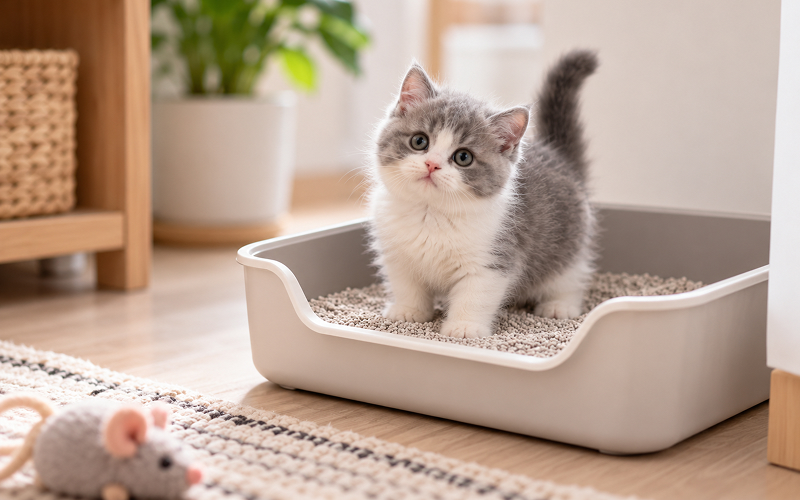
The tray itself should also be easy to enter. A litter box designed for an adult cat may have sides that are unnecessarily high for a small kitten.
If you live in a larger or multi-storey home, an additional tray may also help prevent accidents caused simply by distance.
Should You Keep Using the Same Litter?
When possible, we suggest asking what type of litter your kitten is already accustomed to.
A sudden change in texture or scent can make an otherwise familiar toileting setup feel completely different. Starting with something recognisable removes one unnecessary adjustment.
Once your kitten is settled and consistently using the tray, you can gradually introduce another litter if you prefer.
This is also something worth asking about before bringing home munchkin cats or any other kitten. At this stage, familiarity with the litter and tray setup usually matters more than breed.
How Can You Encourage Good Kitten Toilet Habits?
Litter box training usually works best when it is kept simple.
Show your kitten where the tray is when they first arrive. You can also gently bring them near it after waking, eating or playing, when they may be more likely to need it.
There is no need to repeatedly place them inside the tray or move their paws through the litter.
When helping a kitten learn where to toilet, consistency is generally more useful than pressure. Keep the tray clean, leave it in a predictable location and make sure your kitten can reach it whenever needed.
We also advise against shouting at or punishing a kitten after an accident. Instead, clean the area thoroughly and look at what may have made the intended toilet location less convenient.
Why Might a Trained Kitten Still Have Accidents?
When an owner tells us their kitten has suddenly gone somewhere else, we usually start with a few practical questions.
Has the litter changed? Is the tray clean? Has it been moved? Was a door closed? Has the kitten suddenly been given access to a much larger part of the home?
A new environment can also temporarily affect established kitten toilet habits.
Rather than seeing every accident as bad behaviour, treat it as information. Something about the setup may need adjusting.
If your kitten repeatedly chooses the same inappropriate spot, clean it thoroughly so lingering odours are less likely to encourage them to return there.
When Should You Be Concerned?
An occasional accident during the settling-in period is different from a persistent or sudden change in established behaviour.
Speak with a veterinarian if your kitten strains while urinating or defecating, cries while toileting, repeatedly enters the tray without producing much, develops diarrhoea, has blood in their urine or stool, or otherwise appears uncomfortable.
At this point, training your kitten to use the litter tray should not be the only focus. A health-related cause may need to be ruled out.
Helping Your Kitten Settle In With Xi Meow
At Xi Meow, toilet training forms part of how we prepare our kittens before they leave for their new homes. This means new owners are not expected to introduce the litter tray as a completely new concept after collection.
We also encourage families to ask about the setup their kitten already knows, including the type of litter they have been using, feeding routines and their existing environment. Keeping some of these details familiar can help established habits carry over more smoothly during the first few days at home.
We continue supporting families after their kittens go home, so you have someone familiar with your kitten to approach if questions about toileting, feeding, settling in or everyday behaviour come up.
If you are preparing for your first kitten, you can book a viewing to meet our kittens and speak with us about how we prepare them for the transition to their new homes.
Frequently Asked Questions
How long does it take to toilet train a kitten?
Xi Meow kittens are toilet trained before collection, so most owners are supporting an existing habit. Adjustment may take a few days depending on the new litter, tray location and home environment.
Should I move my kitten’s litter tray after they settle in?
You can move it, but do so gradually where possible. A kitten that is still learning the layout of a new home may become confused if the tray suddenly appears elsewhere.
How often should I clean a kitten’s litter tray?
Remove waste regularly and keep the litter fresh enough to remain appealing. A dirty tray can discourage use, even in a kitten that is already toilet trained.
Why does my kitten use the litter tray sometimes but not always?
Inconsistent use can happen when the tray is difficult to reach, the litter has changed, or your kitten is still adjusting to a larger space and unfamiliar surroundings.
Should I worry if my kitten suddenly stops using the litter tray?
A sudden change may need veterinary attention, especially if your kitten is straining, crying, has diarrhoea, passes blood, or repeatedly enters the tray without producing much.
