




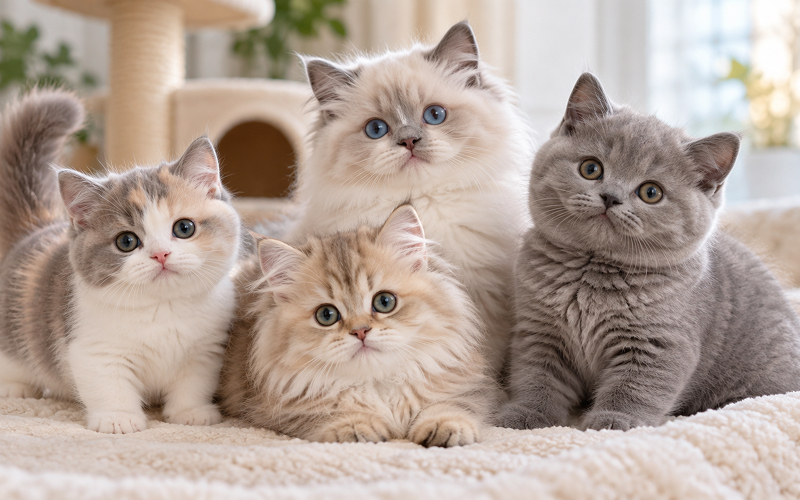
When families visit Xi Meow, price is understandably part of the conversation. They may be comparing a British Shorthair, British Longhair, Ragdoll, or Munchkin and wondering why some pedigree kittens command higher prices than others.
With premium cat breeds, our advice is to look beyond appearance or exclusivity. Breed and bloodline can influence price, but we encourage families to ask what else stands behind it: pedigree documentation, health preparation, early socialisation, and the support provided before and after the kitten comes home.
Key Takeaways
- Premium cat breeds should not be judged by price or appearance alone.
- Pedigree documentation can provide greater transparency about a kitten’s ancestry and bloodline.
- Ask specifically about health checks, vaccinations, screening, and supporting records.
- Early handling and socialisation are less visible but can be highly relevant when a kitten enters a family home.
- Consider the guidance and documentation you receive after bringing your kitten home.
- Whenever possible, meet kittens in person and learn about their individual personalities before deciding.
What Makes a Premium Cat Breed Different?
There is no universal definition of “premium” in the cat world. A higher price alone does not prove that a kitten has been responsibly bred or appropriately cared for.
For us, a more useful question is: what can you actually verify?
Pedigree documentation provides information about ancestry, while health records show what care and screening have taken place. How kittens are raised and socialised also deserves attention.
We advise prospective owners to research the breed, request health and genetic records, review pedigree information, and ask about vaccinations, care, and health guarantees when choosing a kitten.
When comparing premium breeds of cats, these details can tell you much more than a price tag alone.
1. Pedigree and Bloodline
Pedigree is one component of what you may be paying for.
A pedigree provides documented information about a kitten’s ancestry rather than relying solely on a claim that the cat is purebred. Depending on the breeding programme, bloodlines may also have been developed over generations with attention to recognised breed characteristics.
At Xi Meow, our trusted breeders’ cats come from pedigreed lines, including TICA award-winning cats. However, we would not tell families to choose a kitten based on pedigree alone. Temperament, health, early upbringing, and suitability for your household still deserve consideration.
2. Health Checks and Preparation
Health is another area we tell families to ask about directly.
Pedigree cats can have breed-associated health considerations, so appropriate screening and veterinary care form an important part of responsible breeding and placement. TICA’s buyer guidance recommends reviewing veterinary health reports, vaccination records, deworming history, and relevant breed-specific screening before purchasing a pedigree kitten.
At Xi Meow, our kittens undergo health checks, vaccination, and deworming before going to their new families. We also state that our kittens are confirmed negative for FIV, FeLV, and PKD, with supporting documentation provided to their new owners.
Of course, no screening process can guarantee that a cat will never experience a health problem. What families are paying for is the work carried out before placement and greater transparency about their kitten’s health preparation.
3. Early Socialisation and Care
Some of the work behind premium cat breeds is much less visible than coat colour or pedigree paperwork.
A kitten’s early weeks involve learning to interact with people, tolerate everyday handling, play appropriately, explore new surroundings, and respond to ordinary household experiences.
Prospective owners should consider how kittens have been raised and socialised, including whether they are comfortable interacting with people.
For example, families considering British longhair kittens may initially focus on their distinctive coat and appearance, but we also encourage them to consider the individual kitten’s temperament and early experiences
At Xi Meow, our kittens receive daily interaction and are socialised around people, with exposure to family life and dogs.
We find this especially important when families are choosing between kittens. Two kittens of the same breed can still have noticeably different personalities. Spending time with them can tell you things that a photograph never will.
4. Appearance, Colour, and Breed Characteristics
Appearance inevitably plays a part in the appeal of pedigree cats.
Perhaps you love the rounded features and dense coat of a British Shorthair, the longer coat of a British Longhair, or the distinctive proportions that lead some families to buy munchkin kittens.
Certain colours, patterns, or physical characteristics may also be less common or particularly sought after, which can affect pricing.
The rounded face, dense coat, and stocky build of a British shorthair kitten are part of the breed’s appeal, but appearance should still be considered alongside health, temperament, and pedigree.
We would still encourage families to keep appearance in perspective. A striking colour does not replace appropriate health preparation, documentation, or good early socialisation.
If two kittens catch your attention, ask about their personalities as well as their looks. The kitten you connect with most may not necessarily be the one you initially chose from a photograph.
5. Support After Your Kitten Comes Home
One of the easiest things to overlook when comparing premium pedigree cats is what happens after collection.
Before committing, ask what you will receive with your kitten. This might include health and vaccination records, pedigree documentation, a written agreement or health guarantee, guidance on feeding and litter routines, and someone you can contact if questions arise during the transition.
At Xi Meow, we provide supporting documentation, transition assistance, free delivery across Singapore with our specialist, and ongoing guidance after the kitten goes home. We also work with veterinarians who can assist with health concerns where appropriate.
For first-time owners especially, we see this continuity as an important part of what they are paying for.
Questions We Recommend Asking Before Paying More
When families compare kittens at different prices, we recommend asking what accounts for the difference rather than assuming that the most expensive kitten must automatically be the best.
Consider asking:
- Can I review the kitten’s pedigree information?
- What is known about its parents and bloodline?
- What health checks or screening have been completed?
- What vaccinations and veterinary care has it received?
- How has the kitten been socialised?
- What documentation will I receive?
- Is there a written health guarantee?
- What support is available after I bring my kitten home?
The answers give you something concrete to compare beyond breed, colour, and price.
What We Want Families to Understand About Premium Breeds
At Xi Meow, we do not want families to choose a kitten simply because the word “premium” makes it sound more exclusive.
What we want you to understand is what sits behind the kitten you are considering. Pedigree, health preparation, upbringing, socialisation, documentation, and ongoing support all provide useful context when assessing value.
We work with British Shorthair, British Longhair, Ragdoll, and Munchkin kittens, and we encourage families to meet them rather than decide solely from photographs or price tags.
Book an appointment to meet our kittens and speak with our team about their backgrounds, personalities, and preparation before choosing the one that feels right for your household.
Frequently Asked Questions
Are premium cat breeds always more expensive?
Not necessarily. Prices can vary according to breed, pedigree, bloodline, colour, age, and other factors. Rather than relying on price, ask what documentation, health preparation, and care are included.
Does a pedigree mean a kitten is healthy?
No. A pedigree documents ancestry; it is not a health guarantee. Review the kitten’s veterinary records and ask what relevant health checks or screening have been completed.
Is a rare coat colour worth paying more for?
That depends on your preferences. If appearance is important to you, rarity may influence what you are comfortable paying, but we recommend considering health, temperament, pedigree, and upbringing too.
Should I meet a premium kitten before buying?
We recommend it whenever possible. Meeting a kitten lets you observe its behaviour and personality, ask questions, and consider whether the individual cat may suit your household.
What documents should come with a pedigree kitten?
Documentation can vary, but ask about pedigree or registration records, vaccination and health records, screening information where applicable, and the terms of any written agreement or health guarantee.
