




Key Takeaways
- If you are buying a kitten, plan the journey home before collection day rather than deciding on transport at the last minute.
- Use a secure carrier lined with an absorbent pad and keep it closed until you are safely indoors.
- When you transport your kitten home, keep the journey direct, quiet, cool, and as uneventful as possible.
- Prepare the kitten’s food, water, litter tray, and quiet settling area before leaving to collect them.
Introduction
The journey home may only take 20 or 30 minutes, but a lot is happening from your kitten’s perspective. They are leaving familiar surroundings, travelling in a moving vehicle, hearing new sounds, and arriving somewhere completely different.
That is why, when families ask us about transporting a kitten, we recommend planning the journey rather than treating it as simply getting from one address to another.
In Singapore, pets are currently not permitted on public buses or trains. The Ministry of Transport said in August 2026 that LTA would consult the public on whether pets should be allowed in future, while pet owners can presently use pet-friendly ride-hailing options.
What Is the Best Way to Bring a Kitten Home in Singapore?
If you do not drive, choose a service that explicitly accepts pets rather than assuming any private-hire vehicle will do.
For example, GrabPet remains a pet-friendly ride option in Singapore. GrabPet rides include pet-friendly seat covers, additional insurance coverage for pets onboard, and drivers who receive extra training to transport animals.
To book, open the Grab app and select Transport. Enter your pick-up and drop-off points, then choose GrabPet from the available ride types before confirming your booking. Availability depends on whether a suitable driver is nearby, so we recommend checking before collection time rather than assuming a ride will be immediately available.
If you are browsing cats for sale in Singapore, we recommend planning for the journey home rather than waiting until you have chosen your kitten.
Why Do We Recommend a Carrier for the Journey Home?
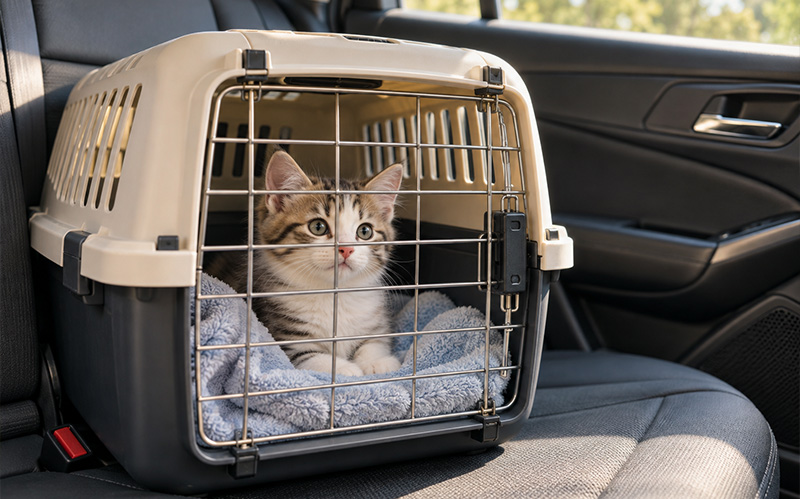
Even if your kitten appears relaxed while being held, keep them securely inside a suitable carrier throughout the journey.
Sudden braking, opening doors, traffic noise, or nervousness can cause an otherwise calm kitten to react unexpectedly. A carrier provides a contained space while reducing the risk of escape.
For transporting a kitten, choose one that gives the kitten enough room to turn around and settle comfortably without being so large that they slide around during every turn.
Line it with an absorbent pad and, where possible, add a familiar-smelling towel or blanket. Check every fastening before leaving.
Should You Let Your Kitten Out If They Cry?
We know hearing your new kitten meow can make you want to open the carrier and comfort them. During the journey, we generally recommend leaving it closed.
Meowing can simply be a response to unfamiliar movement, smells, and sounds. Speak gently instead, and, when possible, have someone sit beside the carrier.
Avoid opening it beside a vehicle door or window. A frightened kitten can move surprisingly quickly.
If you notice persistent breathing difficulty, collapse, repeated vomiting, or other signs of significant distress, stop somewhere safe and seek veterinary advice.
How Can You Make the Journey Less Stressful?
Our preferred kitten transport routine is deliberately uneventful. Go directly home, rather than adding shopping, meals, or family visits along the way.
During the journey:
- secure the carrier so it cannot slide around
- keep conversations and music at a moderate volume
- avoid directing strong air-conditioning straight into the carrier
- keep vehicle doors and windows closed
- avoid repeatedly handling or passing the kitten around
- never leave the kitten unattended in a stationary vehicle
Singapore’s heat makes the last point particularly important. Cool the vehicle before setting off.
Should You Feed Your Kitten Before Travelling?
For a short journey, we generally would not give a large meal immediately before departure. Some kittens can become nauseous during car travel.
However, young kittens still need an appropriate feeding routine, so avoid withholding food unnecessarily. Ask when your kitten last ate and whether they have shown any previous sensitivity when travelling.
Bringing a small amount of familiar food can also help if an expected short journey is significantly delayed.
What Should You Bring When Collecting Your Kitten?
You do not need an elaborate travel kit. We suggest bringing:
| What to Bring | Why |
|---|---|
| Secure carrier | Keeps the kitten safely contained |
| Absorbent pad | Helps with unexpected accidents |
| Spare towel | Replaces soiled bedding if necessary |
| Familiar blanket | Provides a familiar scent where available |
| Tissues or wipes | Useful for small clean-ups |
| Kitten documents | Keeps health and microchip information together |
| Familiar food | Useful if there is an unexpected delay |
The more important setup should already be waiting at home.
What Should You Do When You Arrive Home?
Do not open the carrier in a car park, lift lobby, corridor, or other communal space.
Bring your kitten indoors first, secure accessible doors and windows, then place the carrier in the quiet area you prepared. Open the door and allow your kitten to emerge at its own pace.
Some kittens investigate immediately. Others stay inside for a while because the carrier is temporarily the most familiar thing around them.
Keep the first arrival calm. Photographs, introductions, toys, and wider exploration can come later.
How We Support the Journey Home at Xi Meow
At Xi Meow, we consider the transition to your home part of the handover process, rather than something that begins after the kitten arrives.
We currently arrange free delivery across Singapore with support from our specialist, so families don’t necessarily have to organise an unfamiliar first journey themselves. We can also explain your kitten’s existing feeding routine and habits so you know what to maintain during those first few days.
If you are comparing cat breeds for sale, we can also discuss how our British Shorthair, British Longhair, Ragdoll, and Munchkin kittens may differ in temperament and everyday care.
You can book an appointment to meet our kittens and ask us about collection, handover, transporting a kitten, and preparing for the first day at home.
Frequently Asked Questions
Can I take a kitten on the MRT or bus in Singapore?
Pets are currently not permitted on regular public buses and trains. Consider a pet-friendly ride-hailing service, a suitable taxi, dedicated pet transport, or a private car instead.
Should I hold my kitten during the car journey?
We recommend using a secure carrier. Holding a kitten loose inside a vehicle creates an unnecessary escape and safety risk if it becomes frightened.
Where should I put the carrier in the car?
Place it somewhere stable where it cannot slide, tip, or be exposed to direct heat or strong air-conditioning.
What if my kitten urinates or vomits during the journey?
Use an absorbent liner and carry a spare towel. Once somewhere secure, replace soiled bedding and monitor your kitten for continuing signs of illness.
Should I open the carrier as soon as I reach home?
Wait until you are inside, and the external doors and accessible windows are secured. Place the carrier in the prepared settling area and let your kitten emerge on its own.
